|
|
|
|
|
|
|
|
In response to requests from local partners, DataHaven developed a report (see below) with our original analyses and visualizations of public data related to the coronavirus pandemic. These are updated as new data are posted. We have also created many other charts and datasets available on request...
https://www.ctdatahaven.org/reports/covid-19-connecticut-data-analysis
Data from New Haven suggests that communities of color are disproportionately affected by COVID-19. In a city where 33 percent are Black/African American, 30 percent are Hispanic/Latinx, and 31 percent of people are white, cases of COVID-19 are disproportionately higher among people of color: 29 percent are Black/African American, 30 percent Hispanic/Latinx, and 14 percent white. Notably, we don’t have a full picture of these disparities, because data from COVID-19 testing sites do not accurately account for race and ethnicity. One-quarter of the reported data are missing these identifiers. We implore the state of Connecticut and local testing sites to ensure accurate data collection. We must have complete data about the disparities affecting our communities.
This data isn’t surprising. It illuminates deep-seated health disparities seen for decades in New Haven and other U.S. communities. According to the DataHaven 2018 Community Wellbeing Survey Report, 17 percent of residents in New Haven neighborhoods that are predominantly Black and Latinx have diabetes, compared to 10 percent of residents in New Haven overall. Disparities by race also occur in asthma prevalence, with 15 percent of white, 22 percent Black, and 30 percent Latinx residents in New Haven reporting asthma. A new DataHaven report on health equity in Connecticut documents stark differences in access to economic opportunities, food, affordable housing, health care, and more, disproportionately impacting low-income individuals and people of color, particularly Black and Latinx residents.
These gaps in health are part of complex issues ingrained in our society. Health is affected by elements related to one’s community, race, environment, and social and economic status. The Black and brown communities that are most at-risk for chronic diseases (e.g., heart disease, diabetes, hypertension) and COVID-19, experience greater barriers within their environments that prevent people from engaging in healthy behaviors. These barriers can be lack of access to affordable healthy foods, streets unsafe for walking and biking, limited recreational resources, among others. These elements are part of the structural racism that has profound impacts on access to health care and opportunities to live a healthy life. We see this play out dramatically with COVID-19.
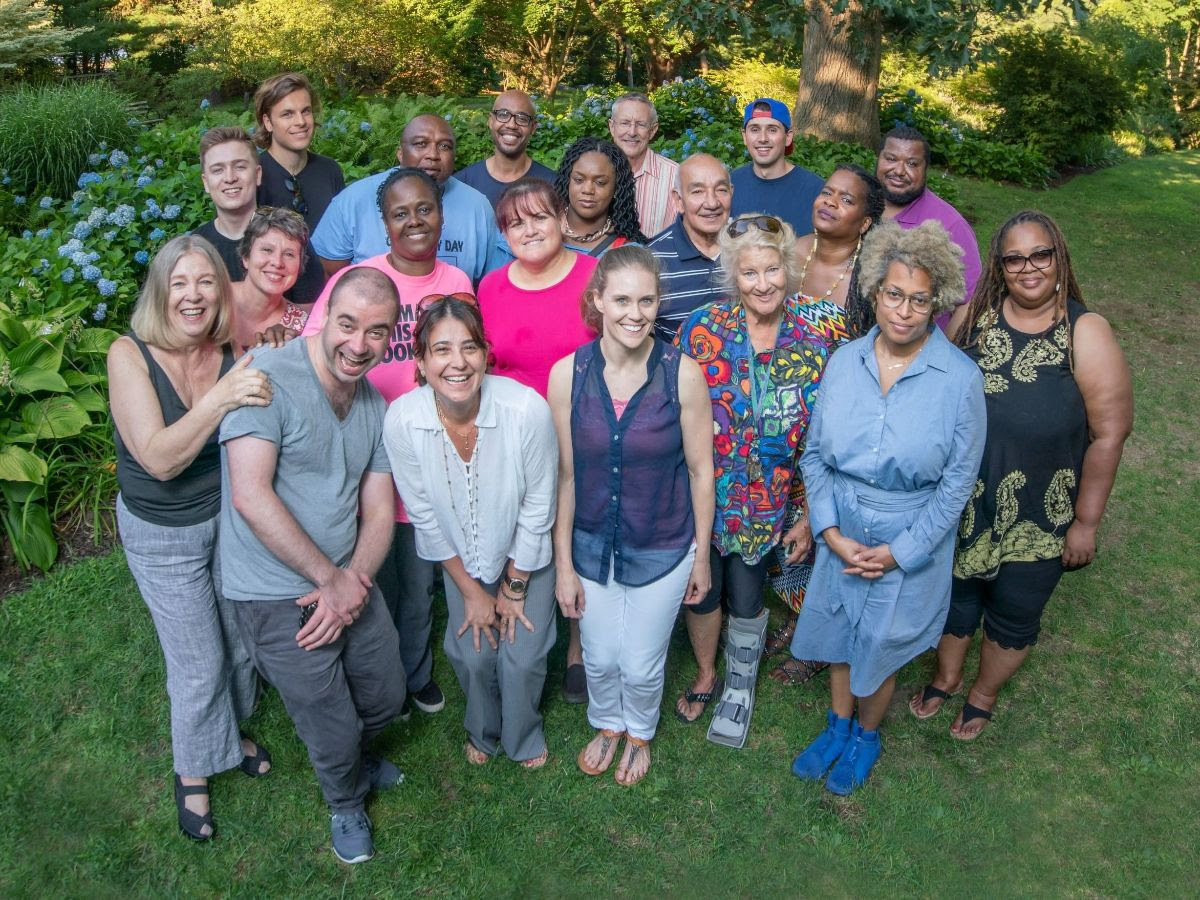
The New Haven REACH Coalition is a new approach to local solutions. Made up of several New Haven residents and community partners, the REACH Coalition began with federal funding from the Centers for Disease Control and Prevention. Racial and Ethnic Approaches to Community Health, or REACH, aims to address systemic barriers that create health disparities in chronic diseases. To address these barriers, REACH brings together members of the community to plan and carry out strategies to address health equity. The pandemic has made the work of REACH more pressing — as chronic diseases are underlying conditions that put people at risk for COVID-19, especially people of color.
Through the specific activities of the REACH strategies put forth by the CDC, we are tackling systems that perpetuate inequities through:
Prioritizing equity in the food assistance system by promoting and coordinating access to healthy foods in food pantries.
Supporting breastfeeding among Black moms by hiring a Black peer counselor, improving community spaces for breastfeeding, and advocating for policy changes.
Creating connections among health centers and community supports through Community Health Workers to help people access resources.
Centering historically segregated communities of color in planning processes for safer and equitable “active” transportation (biking, walking, taking the bus).
The REACH Coalition has also spent its first year focused on the formative work of our member organizations’ and individuals’ roles in upholding components of racist infrastructure that still exists today, resulting in inequities. We are examining systematic ways in which we can address racism by creating racial equity goals and values, and encouraging self-reflection with anti-racism education. The work is difficult and incremental. It is work we must all do.
As the REACH Coalition & Steering Committee, we suggest the following actionable steps for all partners in New Haven and across the state:
1. Foster decision-making that centers the voices of communities by including residents in decision-making roles. Staff, boards, and committees of organizations should reflect the local community.
2. Prioritize health-promoting assets during and after COVID-19, such as increasing access to healthy, affordable foods; ensuring safe, healthy housing; and creating safe neighborhoods.
3. Examine your roles in systems and organizations and identify specific tactics that contribute to undoing racism, such as anti-racist trainings and policy development.
This pandemic has clearly shown the devastating impact of systemic racism. We must work toward ending health disparities and not simply return to “normal” — so that we can all live our healthiest lives.
The REACH Steering Committee is comprised of New Haven residents, local organizations, community partners and existing coalitions, including the Healthier Greater New Haven Partnership and the New Haven Food Policy Council and their respective working groups.
On Wednesday, July 29 (9 am - noon), Continuum Recovery Services will be hosting a FREE Virtual Training on Emergency Response to a Mental Health Crisis ...needed now more than ever.
Earn 3 CEUs, and learn the steps for best outcomes during a mental health crisis from the perspective of police, mobile crisis and emergency room providers.
Register here by July 24: http://www.continuumct.org/emergency-response
https://www.nytimes.com/2020/06/26/opinion/confederate-monuments-racism.html
By
Ms. Williams is a poet.
The City of New Haven Department of Arts Culture and Town Green Special Services District are seeking a New Haven- based Artist (s) to design temporary 2-dimensional artwork for display on windows of City Hall next to the Amistad Memorial at 165 Church Street (see website). Artwork should reflect the importance of black and brown lives, influences and culture on our New Haven communities.
Budget: $2500 for artist(s) and supplies
Deadlines
Work Sample Submission Deadline: July 7, 2020
Artist Selection Announcement: July 14, 2020
Artwork Production Deadline: August 4, 2020
Interested artists should submit 3 samples of artwork, contact information, and a brief description of the artwork they propose for transforming the windows around the memorial to kfutrell@newhavenct.gov by Friday, July 7, 2020.
Final Artwork Display Specifications
The windows are located on the ground level of City Hall and border the Amistad Memorial (see photo). Final artwork dimensions should be compatible with window measurements.:
(3) 66"w x 71"h
(1) 54"w x 82"h
(3) 54"w x 70"h
Questions should be directed to Kim Futrell, kfutrell@newhavenct.gov or 203-946-7172.
Connecticut Humanities will be re-granting a total of $470,000 in CARES Act funding. Grant awards will range from $2,500 to $15,000 and no match is required (maximum amount of funding that can be requested is based upon an organization’s budget size). Grants may be used for general operating expenses only (such as salaries, rent, utilities, supplies, and equipment).
· Deadlines: Applications will be accepted starting Friday, May 15, 2020, and will be reviewed on a rolling basis until all program funds have been spent. At least three application reviews will be conducted for all applications received by 11:59 pm on June 1, June 15, and July 1, 2020, respectively. Award notifications are made approximately two weeks following a deadline.
· Eligibility: Includes being a Connecticut-based federally recognized tribe or being incorporated in the state of Connecticut for at least one year as a 501(c)(3) nonprofit organization governed by a board of directors (that meets regularly) and provides significant programs and/or services to the public on a regular basis, including open hours and special events; or functions as a professional service organization that supports humanities program providers.
· Other Requirements: As required by federal guidelines, a DUNS number is needed to receive funds. Apply for it early, as it can take two days to receive it. While not required to initially apply, funds cannot be dispersed without it.
· How to Apply: Applications must be submitted using Connecticut Humanities’ online grant portal. If you do not already have an account with our grants system, you will need to create one in order to be able to apply. The application should take approximately 30-60 minutes to complete.
Summer Meals Public School Sites in New Haven. If anyone is aware of a similar list for other towns please post so we can circulate it. No children need be going hungry.
These sites are open Monday through Friday, 9 a.m. to 11 a.m.
Barnard School - 170 Derby Avenue
Beecher School - 100 Jewell Street
Benjamin Jepson - 15 Lexington Avenue
Betsy Ross - 150 Kimberly Avenue
Bishop Woods - 1481 Quinnipiac Avenue
Katherine Brennan - 200 Wilmont Road
Clinton School - 293 Clinton Avenue
Columbus School - 255 Blatchley Street
Fair Haven School - 164 Grand Avenue
Hooker Middle School - 691 Whitney Avenue
High School in the Community - 175 Water Street
James Hillhouse High School - 480 Sherman Parkway
John Daniels School - 569 Congress Avenue
John Martinez School - 100 James Street
King Robinson School - 150 Fournier Street
Lincoln Bassett School - 130 Bassett Street
Mauro Sheridan School - 191 Fountain Street
Nathan Hale School - 480 Townsend Avenue
Roberto Clemente School - 360 Columbus Avenue
Sound School - 60 South Water Street
Strong School - 130 Orchard Street
Troup School - 259 Edgewood Avenue
Truman - 114 Truman Street
West Rock Academy - 311 Valley Street
Wexler Grant - 55 Foote Street
Wilbur Cross - 181 Mitchell Drive
Hey Nonprofits!
Has your organization created processes and procedures to deal with the COVID-19 crisis? Are staff prepared and properly supported? This checklist created by Risk Alternatives highlights key points to consider.
Learn more: https://www.cfgnh.org/articles/covid-19-response-checklist-for-nonprofits
On Tuesday, June 16, The Greater New Haven Chamber of Commerce’s Health Care & Life Sciences Council awarded Continuum in the Nonprofit Category at the 18th Annual Health Care & Life Sciences Awards.
The virtual ceremony recognized individuals and organizations that have gone above and beyond to support the Greater New Haven business community during COVID-19. Continuum was honored for the compassionate and proactive way in which all levels of our organization worked toward caring for and protecting our clients and staff during these several months of the COVID pandemic. The Chamber recognized Continuum’s efforts in implementing new policies for screening, and in proactively and vigorously protecting and nourishing clients and staff by providing supplies and tools for cleaning, protecting, working from home, adjusting staffing levels, and more amidst the crisis.
Honorees in each of the other category were: Well-Being/Wellness Program Honoree: Yale New Haven Hospital Employee & Family Resources (EFR); Clinical Program Honoree: Grant Street Partnership at Cornell Scott-Hill Health Center; Bio/Life Sciences Honoree: Homodeus, Inc. for their exciting new early, rapid, affordable coronavirus home test; Research Company Or Project Honoree: The Jackson Laboratory for the research and expert curated information relevant to coronavirus research; and Manufacturing Company Honoree: Bio-Med Devices for two specialized ventilators critical to treating the virus.
The event opened with an impressive panel of experts from Greater New Haven’s health care and life sciences community. Panelists discussed the current news on the COVID-19 pandemic in the State; innovative strides that companies in Greater New Haven have made in the areas of COVID-19 research, promising new therapies, tests, and vaccines; and solutions for addressing racial inequity in their respective fields. Panelists included Dr. Todd E. Arnold, Ph.D., Chief Laboratory Operations Officer, Sema4; Dr. Albert Ko, MD, Chair, Department of Epidemiology of Microbial Diseases, Yale School of Public Health; David Lehman, Commissioner & Governor’s Senior Economic Advisor, Connecticut Department of Economic and Community Development; George Llado, Senior Vice President and Chief Information Officer, Alexion Pharmaceuticals Inc.; and Erika R. Smith, CEO, ReNetX Bio, Inc.
Garrett Sheehan, President & CEO of the Greater New Haven and Quinnipiac Chambers of Commerce, shared, “Our region’s robust health care and life sciences community will advance health care across the Greater New Haven region. Panelists also affirmed that Connecticut, and specifically this region, are renowned as a primary bio science hub in the country.
Father's Day is around the corner. This year, why not honor your dad in a special way?
Make a gift to some very vulnerable people with urgent needs. Your donation will go directly to providing Continuum of Care's clients with food and basic needs to keep them nourished, sheltered, and protected.
The country is on fire—right now—yet again. It is on fire with a righteous rage that has come from living under the constant threat of Black death, under the constant fear of state-sanctioned racial violence at the hands of law enforcement and vigilantes. But we as a country have been here before many times. About five years ago, social justice foundations and progressive donors proudly proclaimed that Black lives mattered and that they would put significant resources behind building the capacity of Black-led and Black-centered organizing happening in communities across the country...
https://nonprofitquarterly.org/dear-philanthropy-these-are-the-fires-of-anti-black-racism/
Thursday afternoon found me kneeling in front of my 2-year-old’s bedroom door, crying. She was on the other side, also crying. Nap was not happening…again.
And not only was I failing abysmally to convince an eminently unreasonable child to nap, I was missing a work call (actually for this article)...
Open Communities Alliance (OCA) is a Connecticut-based civil rights non-profit working to confront the state’s deep levels of residential segregation, which deprive low income families of color of access to opportunity and deepen the sharp income and race divisions in our society. Open Communities Alliance seeks to expand its enforcement staff and activities to combat exclusionary zoning and ensure housing choice for all families in Connecticut.
Position Overview
OCA seeks an individual deeply committed to social justice capable of working as part of a team to apply the principles of the Fair Housing Act to zoning and discrimination in Connecticut. The Staff Attorney will be responsible for monitoring affordable and multifamily housing zoning proposals across the state, including attending hearings, analyzing fair housing implications of denials, engaging in advocacy to relevant officials, and, where appropriate, pursuing enforcement activities including filing administrative complaints and/or developing and initiating litigation. The Staff Attorney will also conduct research and advocacy on the fair housing implications of municipal zoning regulations in regard to multi-family and affordable housing development, assist with the development of OCA’s new fair housing testing program, and participate in fair housing trainings as part of OCA’s outreach efforts. This is a full-time permanent position that includes a competitive benefits package. Salary, title, and responsibilities commensurate with experience. Salary range starts at $76,000.
Responsibilities
The Staff Attorney will be responsible for:
Who we are looking for:
Position to begin ideally in July 2020. Small moving stipend available for moves from out of state. Please submit a resume and cover letter to info@ctoca.org and include “OCA Staff Attorney” in the subject line. Position is open until filled, with the goal of completing the hiring process by the end of July.
Please visit our website for the most up-to-date information on this position: https://www.ctoca.org/employment_opportunities
Open Communities Alliance does not discriminate on the basis of race, age, creed, color, religion, national origin or ancestry, sex, gender, disability, veteran status, genetic information, sexual orientation, gender identity or expression, pregnancy or any other basis protected from discrimination under applicable law. Open Communities Alliance is an equal opportunity/equal access/affirmative action employer fully committed to achieving a diverse workforce and complies with all Federal and State laws, regulations, and executive orders regarding non-discrimination and affirmative action.
Congratulations to Laura Barberia winner of both the Funniest Video and Audience Choice Award in the #WPAATV coVIDEO 3-Minute Movie (Or Less) make a movie challenge. She will be spending $75 in prize money at The Eatery, She was referred to the contest by Lee Cruz.
|
|||
|
Hello,
In an effort to ensure that Connecticut’s COVID-19 response and recovery efforts center health equity, Health Equity Solutions is collecting information from residents in CT through an online survey and one-on-one conversations. The survey asks respondents to identify concerns and proposed solutions to those concerns. These results are shared with policymakers, other decision-makers, philanthropy, and Health Equity Solutions’ partners on a regular basis. The survey is offered in 3 languages, can be taken multiple times, and can be found here:
Survey English: https://www.surveymonkey.com/r/QN6BN3G
Survey Haitian-Creole: https://www.surveymonkey.com/r/HES_Haitian-Creole
Survey Spanish: https://www.surveymonkey.com/r/HES_Spanish
If appropriate to your network, please share the survey.
We continue to collect input on unmet needs and proposed solutions. Summary results are now available on our website and will be updated regularly, which can be found here http://hesct.org/covid-19/covid-19-health-equity-community-assessment-summary/.
Please do not hesitate to reach out if you have any questions.
Kind regards,
Samantha Lew
Policy Analyst & Advocacy Specialist for Health Equity Solutions
Who We Are Looking For?
Are you someone who wants to use your accounting experience to improve lives in your community? Do you enjoy interacting with colleagues from all departments and being an integral part of making an organization work? Do you find joy in working with numbers, and find satisfaction in accuracy? This might be the position for you!
Position
The Accounting Specialist is a key position within our Finance Team and is responsible for payables, receivables, data entry, and other accounting functions. The successful candidate is detailed oriented and thrives when multi-tasking in a fast-paced office environment. This is a full-time position (40 hrs/week) reporting to the Accounting Manager.
Responsibilities
Performs daily A/P and A/R functions.
Enters data into our accounting databases.
Performs other duties as required.
Qualifications
Some accounting education, associates preferred
3 years of accounting/bookkeeping experience, A/P preferred
Capable of quickly learning our systems
A team player who collaborates across the organization.
Personal qualities of integrity, credibility, and dedication to the mission of UWGNH.
Application Procedure
Send resume, cover letter and salary requirements to employment@uwgnh.org with the following subject line: Application for Accounting Specialist.
Position open until filled.
Older adults and people who have severe underlying medical conditions like heart or lung disease or diabetes seem to be at higher risk for developing more serious complications from COVID-19 illness.
A guide to help you make decisions and seek appropriate medical care.
People with COVID-19 have had a wide range of symptoms reported – ranging from mild symptoms to severe illness.
Symptoms may appear 2-14 days after exposure to the virus. People with these symptoms or combinations of symptoms may have COVID-19:
Or at least two of these symptoms:
Children have similar symptoms to adults and generally have mild illness.
This list is not all inclusive. Please consult your medical provider for any other symptoms that are severe or concerning to you.
If you have any of these emergency warning signs* for COVID-19 get medical attention immediately:
*This list is not all inclusive. Please consult your medical provider for any other symptoms that are severe or concerning to you.
Call 911 if you have a medical emergency: Notify the operator that you have, or think you might have, COVID-19. If possible, put on a cloth face covering before medical help arrives.