All Posts (8)

Sort by

Photo Credit: Ivana Cajina


I realized something recently that feels both simple and profound.


I don’t feel like I have to hide anymore.


For most of my life, I did, but I didn’t even realize that’s what I was doing. It wasn’t in obvious ways. It’s not like I was disappearing from the world. It was by carefully managing what people saw.

The Many Ways We Hide

One of the ways I hid was by isolating. Another was by lying. Not the dramatic kind of lying where you invent stories or deceive people about big things. My main form of lying looked much more socially acceptable - it was through people pleasing. I would say I was happy to do things for (or with) other people that I really didn’t want to do.

“Sure, that sounds great.”

“I’d be happy to help.”

“No, I don’t mind at all.”

Meanwhile, inside, I felt completely different. I didn’t want to do it. I was resentful, exhausted, and overwhelmed. But I didn’t want anyone to see that. So I hid by lying.

Secrets Are What We Use When We Don’t Have Boundaries

Recently, I came across something in an old recovery journal of mine that explained this perfectly. It said:

“If we have no boundaries in our families, we tell lies so we can have privacy. Secrets stand in for boundaries.” I don’t know where I heard or read that, but it really struck me because it perfectly described my life before recovery. I didn’t have boundaries, so I created secrecy.

I didn’t tell people what I really thought, didn’t say when I didn’t want to do something and I didn’t admit when I made a mistake.

Instead, I hid.

But once I started developing boundaries, something changed. I didn’t feel the need to hide anymore.

Learning to Be Human in Public

One of the biggest shifts in my life was realizing I didn’t have to hide the fact that I’m flawed, and I didn’t need to present like I have it together 24/7 under all circumstances. That might sound obvious. But for years, I carried around a subconscious belief that I wasn’t supposed to have any flaws, and if I had them, I Goddamn well better hide them!

Somewhere along the way, I absorbed the idea that I was just not supposed to have flaws. And if people discovered that I had them, they’d reject me.

So I hid the evidence.

I covered my mistakes, pretended things were fine, and I tried to manage my image. But recovery changed that. Today, when I make a mistake, I can simply say:

“Oops!”

And surprisingly, the world doesn’t end. I don’t collapse into a flood of shame. In fact, I typically smile and have a sense of relief, knowing that I get to be flawed in public. And other people don’t hate or ridicule me.

Repair Instead of Hiding

One of the greatest gifts recovery gave me was learning what to do when I mess up. Before, mistakes felt like catastrophes. Now, they feel manageable. If I make a mistake, I own it. If I hurt someone, I apologize. Then I change my behavior. That’s it. No more raking myself over the coals because “I shouldn’t have done that” or “I should have known better.”

When you know how to repair things, you don’t have to hide from them anymore. You don’t have to pretend you’re perfect. You can just be human.

Boundaries Make Honesty Possible

Another reason I don’t feel like I have to hide anymore is that I’ve learned to communicate directly. If I want something, I ask, and I don’t feel like shit about it.  If I need something, I say so. If I don’t want to do something, I’m honest about that too, instead of hoping people will magically figure it out (or manipulating situations so I can get what I want without saying it out loud).

Boundaries make honesty possible. Without boundaries, honesty can feel dangerous. With boundaries, honesty becomes normal.

The Unexpected Bonus
Read the rest at your own pace here

Read more…

Wedaeli Chibelushiand and Thomas Naadi,BBC Africa, Accra

81639b50-2841-11f1-b297-95b0a0a8331e.jpg.webp
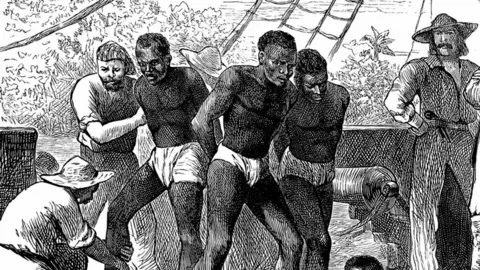
Getty Images A black and white sketch of three slaves being restrained.
 
 
Around 12-15 million Africans were captured during the slave trade

The United Nations General Assembly has voted to recognise the enslavement of Africans during the transatlantic slave trade as "the gravest crime against humanity", a move advocates hope will pave the way for healing and justice.

The resolution - proposed by Ghana - called for this designation, while also urging UN member states to consider apologising for the slave trade and contributing to a reparations fund. It does not mention a specific amount of money.

The proposal was adopted with 123 votes in favour and three against - the United States, Israel and Argentina.

Fifty-two countries abstained, including the United Kingdom and European Union member states.

Countries like the UK have long rejected calls to pay reparations, saying today's institutions cannot be held responsible for past wrongs.

Unlike UN Security Council resolutions, those from the General Assembly are not legally binding, though they carry the weight of global opinion.

"Let it be recorded that when history beckoned, we did what was right for the memory of the millions who suffered the indignity of the slave trade and those who continue to suffer racial discrimination," Ghana's President John Mahama told the assembly ahead of the vote.

''The adoption of this resolution serves as a safeguard against forgetting. It also challenges the enduring scars of slavery,'' he said...

Read more…

There’s a simple practice that has helped me maintain my boundaries more than almost anything else I’ve done.

It’s not complicated, doesn’t take long, and you can start doing it tonight. If you’re in 12-step recovery, you’re probably familiar with it: it’s called a nightly inventory.

I’ve been doing some version of this practice for years now. But over time, my understanding of why it works has evolved. Today, I see it as one of the most powerful internal boundary practices there is.


How This Practice Started

Every night, I write at least ten things I’m grateful for. In the past few months, I’ve started writing a few things in the morning to start my day, then I add to that list at night. I started this practice in July of 2000, originally writing five things each night. That small habit completely transformed my life.

Years later, when I came into recovery and learned about the idea of a nightly inventory, it fit perfectly with what I was already doing. I simply added it to my evening routine. Truth be told, I don’t do this every night now, but anywhere from 5-7 nights per week.

I remember reading something in my twenties that made this whole idea seem ridiculous. In How to Win Friends and Influence People, Dale Carnegie talked about doing a weekly inventory of his behavior. On Saturday nights, he’d reflect on the week and ask himself how he could have done things better.

I thought, “Are you fucking kidding me??! Who would do that?” Fast forward 30+, and here I am doing something even more consistent.


The Basement Metaphor

Here’s the image that helps me understand what a nightly inventory really does. When I first worked the 12 steps, it was like I went down into the deep, dark, dank basement of my life. There was junk and debris everywhere: old resentments, defects of character, unexamined patterns, emotional wreckage.

Doing the 12 steps was like cleaning the entire basement out. First, I cleared out the junk, then I sandblasted the walls, then I painted, carpeted, and furnished the place. Then I redecorated.

By the time I was done, the basement had become a beautiful space where I could relax. A place I wanted to invite people into and that I could actually enjoy. My nightly inventory is like sweeping the floor every night, so the junk never piles up again.


Where Internal Boundaries Come In


Read more at your own pace here

Read more…

31104759287?profile=RESIZE_710x

Featuring work by Catherine Lavoie

In THREADS: STORIES IN FIBER, artist Catherine Lavoie explores topics related to recovery from trauma, family roots, natures beauty, Buddhist wisdom, and a bit of whimsy. The exhibit will be on view from April 3 - April 26, with an Opening Reception and Artist Talk on Saturday, April 11 at 3 p.m. Mirroring the theme of stories, Jen Payne will present a Poetry Reading from her memoir Sleeping with Ghosts on Sunday, April 19 at 1 p.m.

The exhibit THREADS: STORIES IN FIBER includes work in assemblage, installation art, mixed media, photography, soft sculpture, and modern wall quilts. The art incorporates repurposed materials ranging from discarded wedding dresses and vintage doilies to high-tech power cords and plastic shopping bags. “The surprise of recognizing these everyday items in an artistic context is a key component of my work,” Lavoie explains.

“The pieces are designed to tell stories in new and reassembled ways, and to spark curiosity and initiate different ways of thinking.” One of the most meaningful stories in the show is about Helen Rita Pasternak Lavoie, Lavoie‘s mother, who would’ve been 100 years old in April 2026 and to whom this show is dedicated.”

Lavoie, a fiber artist based in Connecticut, merges traditional quilting techniques with innovative, contemporary materials to produce thought provoking artwork. Her art background includes photography, traditional quilting and mixed media. Her career as a psychotherapist informs her interest in human stories, Natures gifts, and Buddhist thought. She is a member of City Gallery, and the Kent Art Association in Kent, Connecticut.

Writer Jen Payne is inspired by the stories that move us most — love and loss, joy and disappointment, milestones and turning points. When she is not exploring our connections with one another, she enjoys contemplating our relationships with nature, creativity, and spirituality. Ultimately, she believes it is the alchemy of those things that helps us find balance in this frenetic, spinning world. Her work has appeared in numerous publications including the 2024 Connecticut Literary Anthology, Sunspot Literary Journal, Anti-Heroin Chic, and The Perch (Yale). She has published five books, the most recent of which is Sleeping with Ghosts offering an intimate exploration of love, memory, and meaning.

The exhibit THREADS: STORIES IN FIBER, the opening reception and the poetry reading are free and open to the public. City Gallery is located at 994 State Street, New Haven, CT 06511. Gallery hours are Friday - Sunday, 12 p.m. - 4 p.m., or by appointment. For further information please contact City Gallery, info@city-gallery.org, www.city-gallery.org.


Read more…

Integrity Is an Internal Boundary

Years ago, when I first got into recovery, I became fascinated with the word integrity. So I looked it up. I was surprised to see that the dictionary had two different definitions.

The first is the one most people think of. Integrity means being honest, having strong moral principles, and doing what you say you’re going to do. The second definition is the state of being whole and undivided. Engineers talk about the structural integrity of a bridge. If there are cracks in the structure, the bridge can collapse.

That second definition felt somewhat familiar, but I couldn’t quite put my finer on it. I eventually realized it was familiar because my internal experience before recovery felt exactly like that: fragmented, not whole. And thus it became the name of my podcast.

Read the rest at your own pace here


Read more…

31101164701?profile=RESIZE_710x
DIXWELL FARMERS MARKET SALES ASSOCIATE

Seasonal Part-Time position, 5 hours weekly on Saturdays, May through November 2026


The Farmers Market Sales Associate supports a vibrant marketplace and community gathering place through building positive relationships with vendors, customers, and community partners. Skilled in customer service and team-minded,the t Sales Associate contributes creativity, organization, and collaboration to the team, and brings a lens of racial equity and economic opportunity to the work.  This position reports to the Dixwell Market Manager.


RESPONSIBILITIES

The Dixwell Farmers Market Sales Associate works with the Director of Agriculture and Farmers Market Manager to assist the farmers market program, including: program management and implementation, vendor engagement and communications, nutrition incentive program implementation, partnerships, and customer engagement. 

  • Implement on-site Farmers Market programming, including: market set-up/tear-town processes, market layouts and stall assignments, equipment transportation and maintenance, management of market hours of operation, and other market logistics 
  • Execute produce, meat, and dairy sales utilizing sales software and produce scale 
  • Provide excellent customer service to farmers market attendees and customers, ensuring they have a positive and inclusive experience 
  • Ensure compliance with city, state, and CitySeed regulations, policies, and guidelines
  • Process nutrition program transactions at the market, including Supplemental Nutrition Assistance Program (SNAP) and CT Farmers Market Nutrition Program (FMNP)
  • Support reporting on market conditions, gross vendor sales, market income, and feedback from customer and vendor surveys
  • Monitor for potential improvements in daily logistics, outreach efforts, and product selection, and suggest ongoing improvements
  • Enforce CitySeed vendor policies by engaging in proactive conflict management, and elevate issues with vendors to CitySeed leadership when necessary
  • Monitor and maintain the cleanliness and organization of all Farmers Market equipment and physical infrastructure, including vehicles, payment terminals, and tents  
  • Communicate when materials updates or replacements are needed

REQUIRED QUALIFICATIONS

  • Ability to lift objects weighing up to 50lbs and work in inclement weather conditions
  • Communication, conflict resolution, and creative problem solving skills
  • Enthusiasm for connecting communities through food

PREFERRED QUALIFICATIONS

  • Experience overseeing events and managing volunteers
  • Experience and/or desire to work with farmers 
  • Working knowledge of Spanish or Arabic

DETAILS

  • Desired Start Date: May 11, 2026
  • Location: New Haven, CT 
  • Hourly position: $20/hour 


TO APPLY
Please email your resume and cover letter to kaitlyn@cityseed.org with the subject line “Dixwell Sales Associate.” Applications will be reviewed on a rolling basis. CitySeed is committed to creating a diverse, equitable, welcoming and inclusive environment for all employees and our community.  We honor candidates' varied experiences, perspectives and identities. 


For more about CitySeed and our mission, visit our website: www.cityseed.org


Read more…


Next Wednesday, March 11th, the Public Health Committee of the Connecticut General Assembly will hold a public hearing about two key pieces of legislation designed to protect access to life-saving vaccines, and each of us has the opportunity to contribute to their passing by submitting testimony in support of science-based vaccine policy. Testimony can be submitted in person (Room 1D of the Legislative Office Building), via Zoom, or in writing (using a form).
The bills: HB 5044 (An Act Establishing CT Vaccine Standards) and Raised Bill 450 (An Act Concerning The Standard of Care for Immunization) have been developed by the CT Department of Public Health and endorsed by the Governor. The bills, which are very similar, make clear that under U.S. constitutional authority, States retain power to protect public health, and that the CT Commissioner of Public Health will establish vaccine policy in CT. This is critically important because the federal Advisory Committee on Immunization Practices (ACIP), appointed by RFK, Jr, consists of vaccine skeptics and anti-vaxers who have been making vaccine recommendations to the CDC that will harm public health if followed..
The ask: The Public Health Committee will hear public oral testimony about these bills on Wednesday, March 11, 10:30 a.m to midnight. There has been vocal opposition to these bills, and we expect opponents to testify in force. Please defend public health by providing testimony in support of science-based vaccine policy in person (Room 1D of the Legislative Office Building), via Zoom or in writing (using a form). Registration for oral testimony will close on Tuesday, March 10, 2026 at 3:00 P.M. The Committee encourages witnesses to submit a written statement and to condense oral testimony to a summary of that statement. See the announcement about the hearing at the end of this email.
When you sign up to testify (whether written or oral), the form asks for your name, title, and affiliation. Don’t be shy about including all of your credentials (e.g., if you have an MD, PhD, DrPH, or MPH degree, be sure to include it), as doing so will enhance the credibility of your testimony.
The texts of the bills, with deletions from prior language in red and additions in blue, are attached to this email.
Please forward this email to colleagues and organizations interested in supporting science-based vaccine policy in Connecticut.
The following are some excellent resources about vaccines: American Academy of Pediatrics, Association of Immunization Managers, and American Public Health Association.
The following provides general guidance about testifying at a public hearing:
https://cthealthpolicy.org/resources-2/advocacy-tool-box/testify-hearing/ and
https://www.cga.ct.gov/asp/content/yourvoice.asp
The following are key talking points in support of the legislation:
Given that anti-vaxxers are making CDC vaccine recommendations, the CT Commissioner of Public Health must have the authority to provide evidence-based guidelines on State vaccine policy.
The bills seeks to preclude challenges to some mandatory immunization requirements (for daycare, schools, colleges). The challenges are being made on the basis that they violate CT’s Religious Freedom Restoration Act. Opponents of this legislation want to reinstate religious exemptions, so it is important to note that high vaccination rates are needed to protect those who cannot be vaccinated, including infants and immunocompromised individuals, such as people with cancer, HIV, etc.
Vaccination is not just a personal choice—it is a community responsibility..
Schools and daycare centers should be safe spaces, not sites of preventable disease outbreaks.
Religious freedom does not include the right to expose others to harm.
States that eliminated non-medical (including religious) exemptions saw increased vaccination rates and decreased disease incidence
We may send more supporting information over the weekend or early next week.
P.S. If you are not already on the Defend Public Health-CT mailing list, please sign up here. If you are on the mailing list with your work email, we strongly recommend that you change your contact info to your personal email address. Please sign up with your personal email address here.

PUBLIC HEALTH COMMITTEE
WEDNESDAY, MARCH 11, 2026
The Public Health Committee will hold a public hearing on Wednesday, March 11, 2026 at 10:30 A.M. in Room 1D of the LOB and via Zoom. The public hearing can be viewed via YouTube Live. In addition, the public hearing may be recorded and broadcast live on CT-N.com. Individuals who wish to testify must register using the On-line Testimony Registration Form. The registration form must contain the name of the person who will be testifying. A unique email address must be provided for each person registered to speak. Registration will close on Tuesday, March 10, 2026 at 3:00 P.M. Speaker order of approved registrants will be listed in a randomized order and posted on the Public Health Committee website on Tuesday, March 10, 2026 at 6:00 P.M. under Public Hearing Testimony. If you do not have internet access, you may provide testimony via telephone. To register to testify by phone, call the Phone Registrant Line at 860-240-0560 to leave your contact information. Please submit written testimony using the On-line Testimony Submission Form. The Committee requests that testimony be limited to matters related to the items on the Agenda. The first hour of the hearing is reserved for Legislators, Constitutional Officers, State Agency Heads and Chief Elected Municipal Officials. Speakers will be limited to three minutes of testimony. Oral testimony will conclude at 12:00 AM on 3/12/2026. The Committee encourages witnesses to submit a written statement and to condense oral testimony to a summary of that statement. All public hearing testimony, written and spoken, is public information. As such, it will be made available on the CGA website and indexed by internet search engines.
SUBJECT MATTER: Public Health Related Bills
*S.B. No. 450 (RAISED) AN ACT CONCERNING THE STANDARD OF CARE FOR IMMUNIZATION.
*H.B. No. 5044 (COMM) AN ACT ESTABLISHING CONNECTICUT VACCINE STANDARDS.


Read more…

Discipline Equals Freedom, But Not the Way I Used to Think

Years ago, I recorded a podcast episode called Discipline Equals Freedom. And I meant it.

Back then, I was talking about structure. Food plans. Dating plans. Financial reserves. Time management. Putting systems in place so you didn’t have to make the same decisions over and over again. I still stand behind that.

Structure does create freedom. Planning ahead does reduce chaos. Clear rules of engagement do reduce anxiety.

That episode was true for where I was at the time. But my understanding of discipline has evolved. Today, when I say discipline equals freedom, I’m not talking primarily about external structure. I’m talking about internal boundaries. I’m talking about the discipline of not abandoning yourself in the presence of emotion. And that kind of discipline creates a deeper kind of freedom.

At first, I thought discipline meant grit, hustle, white knuckling your way through discomfort. Doing things you don’t want to do when you don’t want to do them. And while there’s some truth in that, that’s not what discipline means to me anymore.

Now, I see discipline through the lens of internal boundaries.  And from that perspective, discipline doesn’t feel harsh. It feels like safety, like staying with yourself until things make sense from the inside. It feels like not abandoning yourself in the presence of emotion. That’s the discipline that creates freedom.


The Discipline of Not Leaving Yourself

When most people hear the word discipline, they might think like I did about external things like food plans, workout routines, budgets, time management systems. Those are external structures. Internal discipline is different.

Internal discipline is what happens in the invisible moments. It’s the moment when someone is upset with you and your nervous system wants to rush in and “fix it.” It’s the moment when your mind starts living into the wreckage of the future. It’s the moment when guilt floods your body after you say no.

Internal discipline sounds like this:

Pause.
Stay.
Breathe.
Do not collapse.
Do not rescue.
Do not spin.
Do not self-abandon.

Those are internal boundaries. And they require discipline.

Read the rest at your own pace here.

Read more…

Blog Topics by Tags

Monthly Archives